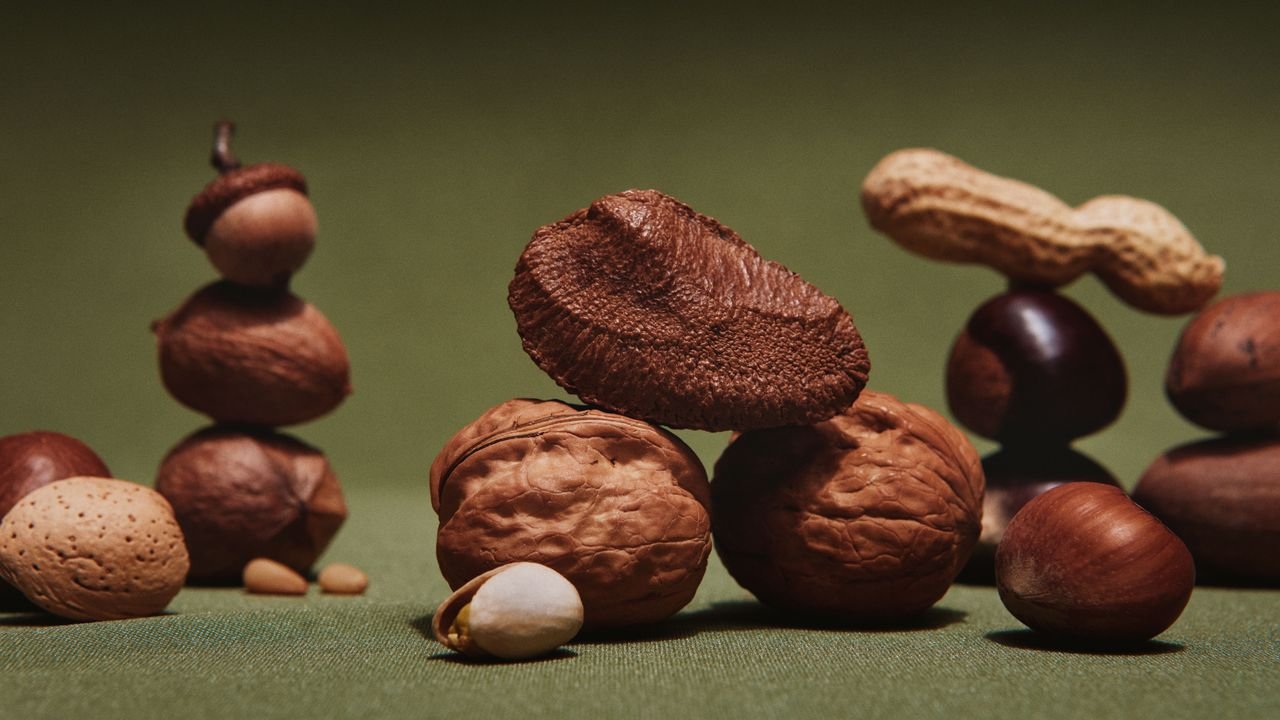
The fruit of the oak tree—so, yes, they’re tree nuts—acorns are oval in shape with pointy ends and smooth, dark brown exteriors. According to The Oxford Companion to Food, “acorns have been eaten since prehistory times, and still are, but their use has greatly diminished.” Several species are indigenous to North America and were eaten by both Native communities and early settlers.
In parts of Europe—especially Spain, Portugal, and southwestern France—it’s traditional to feed pigs acorns. The high fat content of acorns, particularly oleic acid, is deposited in the pigs’ muscles, creating marbling that makes the meat tender, juicy, and richly nutty—a hallmark of specialties like jamón ibérico.
Because their raw meat is high in tannins and quite bitter, most acorns are processed before being distributed for human consumption. You can find acorn flour on sites like Etsy and Foraged and use it to make pancakes and baked goods, for example. (Note that acorn flour is rather dense, so many recipes may cut it with other flours.) In Korean cooking, acorn starch is used to make a savory jelly called dotorimuk.
Double-Sifted Acorn Flour, 1-lb.
Photo by Travis Rainey, Food styling by Emilie Fosnocht
2. Almonds
Slim, oval-shaped almonds have one pointed end and one rounded end and a thin brown skin marked with ridges. It’s relatively rare to find them with their shells on, but if you do, you’ll know they’re almonds if those exteriors are tan and marked with holes. At larger Middle Eastern stores and some farmers markets, look out for green almonds with soft, fuzzy exteriors in the springtime.
When sold as slivers instead of whole, they’ve often been blanched, a process that removes their skins, exposing cream-colored flesh. No matter how they’re sold, though, these good-for-you nuts contain calcium, magnesium, and healthy fats.
Flavor-wise, almonds are mild and sweet, lending themselves to everything from nut mix to kale and brussel sprout salads to herby rice dishes to morning granola. Perhaps you’ve tried the rounder, flatter, and sweeter variety called Marcona almonds, from Spain? They’re usually sold precooked—fried or roasted and then salted—and make for great snacks like these cumin-and-paprika-coated nuts.
You’ll also find almonds processed into a paste called marzipan, powerfully scented almond extract, and a flour, which brings a nutty quality and pleasant crumb-like texture to baked goods like this French almond cake. Almond flour is also key to many gluten-free and kosher-for-Passover recipes like abambar cookies.
Photo by Travis Rainey, Food styling by Emilie Fosnocht
3. Brazil Nuts
The heavyweight of the group, crunchy, mild-flavored Brazil nuts often have some brown skin remaining on their pale flesh. And that size? Just two of them will provide your daily doses of the antioxidants selenium and vitamin E. We think they’re best for snacking, but if you have an abundance, try them in a banana parfait or a roasted nut mix.
Disclaimer: As an Amazon Associate, I earn from qualifying purchases; I may earn a commission from qualifying purchases as an affiliate. Please note that I only recommend products I believe will provide value to my readers.
Marcella Gucci embodies a warm, inviting, and adventurous spirit. Her tone is friendly yet knowledgeable, blending passion for culinary exploration with a genuine love for travel. She communicates with enthusiasm, inspiring her audience to embrace new flavors and cultures.
As the founder of Travel Foodie, Marcella is a culinary enthusiast and globe-trotter. With a keen eye for detail and an appreciation for diverse food cultures, she curates experiences that connect people through the universal language of food. Marcella’s mission is to transform culinary dreams into reality, guiding her audience on a delectable journey around the world.
Travel Foodie where culinary curiosity meets wanderlust! This site is your passport to a world of flavors, offering a delightful mix of travel tips, authentic recipes, and immersive culinary experiences. Whether you’re planning your next adventure or simply looking to spice up your kitchen, we will serves up inspiration and tasty tidbits that will leave you hungry for more. Bon appétit!
To provide the best experiences, we use technologies like cookies to store and/or access device information. Consenting to these technologies will allow us to process data such as browsing behavior or unique IDs on this site. Not consenting or withdrawing consent, may adversely affect certain features and functions.
Functional
Always active
The technical storage or access is strictly necessary for the legitimate purpose of enabling the use of a specific service explicitly requested by the subscriber or user, or for the sole purpose of carrying out the transmission of a communication over an electronic communications network.
Preferences
The technical storage or access is necessary for the legitimate purpose of storing preferences that are not requested by the subscriber or user.
Statistics
The technical storage or access that is used exclusively for statistical purposes.The technical storage or access that is used exclusively for anonymous statistical purposes. Without a subpoena, voluntary compliance on the part of your Internet Service Provider, or additional records from a third party, information stored or retrieved for this purpose alone cannot usually be used to identify you.
Marketing
The technical storage or access is required to create user profiles to send advertising, or to track the user on a website or across several websites for similar marketing purposes.